
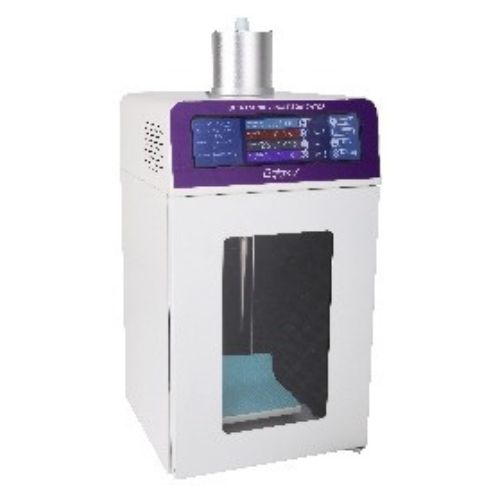
An Ultrasonic Probe Sonicator is a laboratory instrument designed to deliver high-intensity ultrasonic energy into liquid samples using a probe. It enables efficient cell disruption, homogenization, emulsification, and extraction of biomolecules, making it an essential tool for molecular biology, biotechnology, and pharmaceutical research.
Probe sonicators are widely used in cell biology, molecular biology, microbiology, pharmaceutical research, nanotechnology, and chemical laboratories. They are ideal for lysing cells, dispersing nanoparticles, preparing emulsions, and accelerating chemical reactions in a controlled and reproducible manner.
Modern ultrasonic probe sonicators feature adjustable amplitude, pulse mode, digital display, and robust probe construction. These features ensure precise energy delivery, minimal heat generation, and reproducible results, while the compact design fits conveniently on laboratory benchtops.
Key Features:
-
High-intensity ultrasonic energy for sample processing
-
Adjustable amplitude and pulse settings for controlled operation
-
Compact, durable, and easy-to-use design
-
Digital display for precise monitoring
-
Efficient for cell lysis, homogenization, emulsification, and extraction
-
Minimal heat generation for sensitive samples
Applications:
-
Cell disruption and lysis in molecular biology
-
Nanoparticle dispersion and homogenization
-
Emulsification and extraction of biomolecules
-
Chemical reaction acceleration
-
Pharmaceutical and biotechnology research
Ultrasonic Probe Sonicators provide a powerful, precise, and efficient solution for sample preparation, ensuring consistent and reproducible results for laboratories handling biological, chemical, and nanomaterial samples.
Reviews
There are no reviews yet.